Bibby Cuddahy was a Ducky Boy. And like most Ducky Boys he was Irish,
under five-foot-six, and crazy. Webster Avenue was Ducky Boy country.
They roamed their turf like midget dinosaurs, brainless and fearless.
They respected only nuns and priests. They would fight anyone and
everyone and they'd never lose. They'd never lose because there were
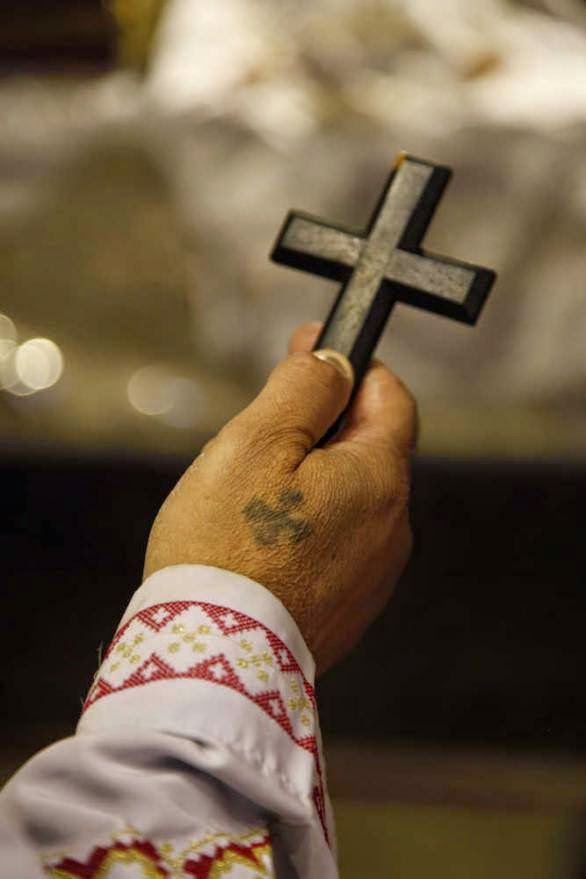
hundreds of them. Hundreds of stunted Irish madmen with crucifixes
tattooed on their arms and chests, lunatics with that terrifying,
slightly cross-eyed stare of the one-dimensional semihuman, urban punk
killing machine. And they were nasty -- used tire chains, car aerials,
and the "Webster Avenue walking stick," a baseball bat studded with
razors. (The Wanderers, Novel by Richard Price, 1974)
Book: Lost Boys of the Bronx: The Oral History of the Ducky Boys Gang
03. 02. 2015.
08. 11. 2014.
U meni je grozno izgledalo

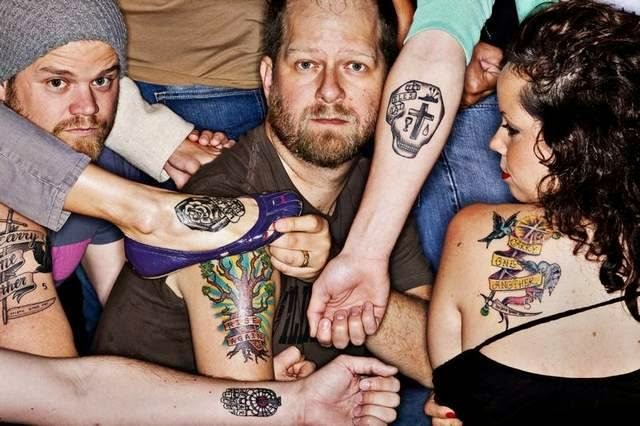
„Credendo vides“ tetovirano je velikim slovima na podlaktici Felicitas Auersperg. Prevedeno to znači: "Vjerujući ćeš vidjeti".
"Vidiš samo ono u što vjeruješ. Ja vidim slobodu. Moja majka vidi vjeru ", kaže ova 38-godišnjakinja. Dvije riječi iz latinskog - dva različita svijeta. A između mnogo prostora za svađu. Dizajnerku je njezina majka odgojila strogo prema pravoslavnim vrijednostima.
"Djelovalo se, ali se nije proispitivalo. To me je ljutilo."
Uz to je došlo da je morala pohađati rimokatoličku samostansku školu.
"Učile su me časne sestre. Svugdje su bili križevi s tim siromahom na njima. Imala sam toliko pitanja. Zašto bih ja trebala biti nečista kao žena? Zašto imam istočni grijeh? Nisam dobijala odgovore. Osjećala sam se kao Alisa u zemlji čudesa. "
Ona je čeznula za životom Pipi Duge Čarape. I na kraju, mala Alisa se pretvorila u Pipi. U dobi od 16 godina, ona je htjela istupiti iz pravoslavne zajednice. "Uslijedila je prijetnja, da će u tom slučaju moja majka biti izopćena."
Felizitas Auersperg nije istupila, ali je prekinula s vjerom. Pohađanje katoličke škole postalo je nepodnošljivo.
"Bila sam zarobljena u kavezu doktrine. To me je izjelo iznutra. Skoro da nema dječijih fotografija u kojima se smijem."
Prešla je u višu školu za dizajn tekstila - okružena slobodnim dušama.
"To je bilo kao u raju."
Kod kuće su uslijedili dueli u vrištanju. Nakon što su svađe postale sve žešće, sa 17 godina preselila se u jedan mali stan.
"Sama sam sebi finansirala svoj život. I dobila moju prvu tetovažu."
U međuvremenu, kći i majka su se opet zbližile. Ali rasprava o životu i vrijednostima ima kao i prije.
Iz njemačkog preveo Branislav Knežević
Izvor

06. 11. 2014.
Three years behind the guns - Tattooing
Three years behind the guns, the true chronicles of a "diddy-box," by L.G.T.; illustrated by Chris J©œrgensen and George Varian and with photographs.1908


Tattooed Men for Spain.
Time. v.4 no.93 1886.
Tid-Bits an Illustrated Weekly For These Times
New York, may 22, 1886.


Tid-Bits an Illustrated Weekly For These Times
New York, may 22, 1886.
28. 10. 2014.
"Ja bih lahko poznala Ivana - Na ruci mu keršteno zlamenje"
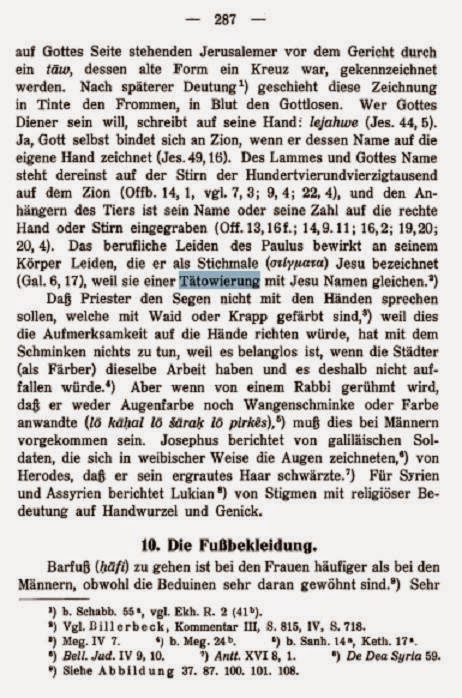
U ovoj lijepoj narodnoj pjesmi pronašao spomen o tetoviranju. Ovdje se tetoviranje spominje kao biljeg krštenja odnosno krsni znamen (keršteno zlamenje). U narodnim pjesmama sam već nekoliko puta naišao na spominjanje tetoviranja. Uglavnom je povezano sa prepoznavanjem, kao oznaka identiteta, kako u dobru tako i u zlu.
Branislav Knežević, 28.10.2014
Branislav Knežević, 28.10.2014
Narodne piesme Bosanske i Hercegovačke. Skupio Ivan Franjo Jukić, banjolučanin i Ljubomir Hercegovac (Fr. Gr. Martić). Izdao O. Filip Kunić, kuprješanin. sv.l. Piesme junačke. (U Osieku, Tiskom C. K. Povl. Tiskarne Drag. Lehmanna i Drugara, 1858.)
IzvorIvo Senjanin i Mijat Berdarić

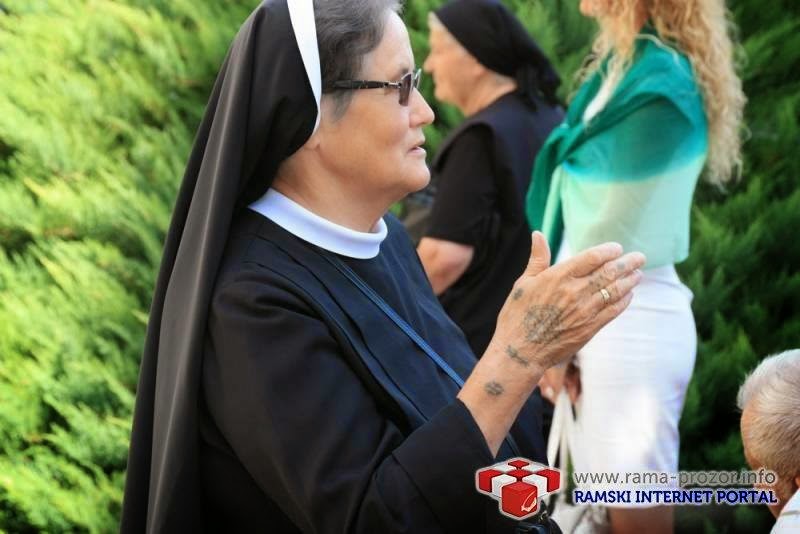
"Od rođenja do smrti sve je bilo u znaku vjere. Kad bi se dijete rodilo i babica mu povezala pupak, već drugi ili treći dan njega je kuma, u pratnji jedne žene, u povojima nosila na krštenje, čekajući pred masivnim vratima crkve "ujaka" da je u crkvu uvede, i to kumče iz krstionice poškropi i znamenuje svetom vodom i tako ga primi u zajednicu kršćanskoga puka. Prodorni plač djeteta označio bi da je crkva dobila još jednog novog člana. Taj biljeg krštenja često bi se kasnije tetoviranjem neizbrisivo ubocao na ruku krštenika kako bi se znalo da je kršćanin i kada bi ga Turci odveli u janjičare ili prodali u ropstvo." (Prof. Franjo Kristić, Tramošnički spomenar, 2002) Izvor
24. 10. 2014.
Mr. Meeson's will in execution (tattooing scene)
Mr. Meeson's Will (online literature)
Augusta Smithers is a frustrated best-selling first
author, financially cheated by her contractual obligations to the huge
Birmingham firm of Meeson's. A series of improbable events precipitates
her into love with the proprietor's son—and precipitates her and the
father overboard together in the subsequent shipwreck of a passenger
liner. Washed to a forlorn shore with him and a few other survivors,
Augusta arrives at the moral dilemma of the novel: whether to sacrifice
herself, out of love for her fiancé, to allow the dying and now
repentent father to write a last will that would reverse his recent
disinheriting of the young man. The difficulty is that in the absence of
all normal writing materials, the amended will can only be inscribed on
her neck and shoulders by a sailor, one Bill Jones, willing to
undertake the tattooing assignment. If she had wanted, for instance, "a
fancy pictur of your young man, I might manage it on your arm," but for a
"doccyment" of the sort in question "one wants space."[11] Instead of indulging herself with an erotic fetish, then, she must in her own person become a legal one. Augusta
of course stalwartly submits to the painful inscription (Fig. 95). She
then delivers the signature and dictates of paternal intention into a
court of law, where the very admissibility of her text, of herself as
text—still sight unseen—is ponderously debated, only to be read into
evidence at last in an eroticized spectacle of disclosure that saves the
day and
helps unite her with her lover (Fig. 96). This resulting union with her
fiancé is witnessed by his embrace of the heroine's body, marked as it
is by the material index, the wound, of familial sanction and
continuity. From financially abused writer to painfully inscribed text:
such is the heroine's sacrificial decline. If woman in the standard
Victorian marriage plot may at any point operate merely as signifier of
patriarchal intentionality, sign and prize of a hero's coming into his
majority, here the fiancée—as corporeal text of the would-be
father-in-law's will—is a reductio ad absurdum of that signifying
function. In a nightmare contortion of female expressivity, the heroine,
once having written to be read, achieves the deserved financial reward
of her popular success only after being read in her own person at last.
And read not just by the staring court. For, in her own readable figure, Augusta Smithers becomes the novel's title figure.[12]
She stands before us as Mr. Meeson's Will incarnate, heroine of the
illustrated novel that the Victorian reader here sees—and I choose the
dead metaphor advisedly—to completion. Then, too, the juridical logic
implied by this climactic courtroom scene of actionable decipherment
cagily doubles for the interpretive signals of a more familiar
novelistic rhetoric. The judge, that is, speaking with the dubiousness
of a critical reader, nonetheless succumbs to credulity with the
ultimate cliché of documentary verification in those exotic
late-Victorian thrillers of which Haggard is to become the best-selling
master: "The whole tale is undoubtedly of a wild and romantic order, and
once again illustrates the saying that 'truth is stranger than
fiction'" (262).
In all this, the levels of
implication emerge in a form that verges on a fourfold allegory:
biological, erotic, generic, and finally textual. The woman's body is
always in one sense the conduit for patriarchal succession. So much,
first, for woman as wife: potential gestational vessel awaiting the
biological imprint of the male will. Second, erotically, the woman's
body is immediately reinscribed into just that masculine line of
succession as object of desire and exchange. Third, generically, the
fetishized female form is the very figure for the spectacle either of
family melodrama or of exotic romance, what Barthes calls the
"striptease" of narrative disclosure itself. It is only at the
fourth—the textual—level that we come around to the promised
photographic moment that the reader may have thought this paper was
losing sight of.
No, it is the story itself that
seems to forget its own photographic twist. For nothing is mentioned
during the final courtroom disrobing about a transitional bit of prudent
jurisprudence by which the legality of the woman as text can be
ratified. The intermediate chapter is called "How
Augusta Is Filed" and narrates the brainstorm by which the Court
Registrar hits on "something better than a certified copy of the will,"
namely "a photographic copy" (213). After the appointed photographer
"took two or three shots at her back," he promised "that he would bring a
life-sized reproduction to be filed in the Registry in a couple of
days" (215–16). The much-reduced novelistic illustrations are of course
all we actually see, except as we visualize the life-size Augusta in
court, the former novelist as text, embodying her own testamentary
declaration. In sum, between the woman as readable writer at the start
of the novel and the female body as legible text in the climactic trial
by evidentiary ordeal, what has intervened is the photographic
equivalent of literary textuality: the character-as print phenomenon, a
textual figuration to be archived (or elsewhere marketed) and read upon
demand.
In that climactic courtroom illustration,
the magnifying glass in the judge's hands is the ultimate tease.
Reaching for one of our own, in order to make out the writing that was
so clear in the earlier etching (the "I leave all" of the
tattooing-in-progress), we find what we might have suspected: that the
full and decisive text is mere indecipherable hatchings (see
enlargement, Fig. 97). What is legibly incised there is only the woman's
body itself, not the signifiers it is supposed to carry. That body is
what we are all there, and all we are there, to read.
1-Fig. 95.:Mr. Meeson's will in execution (tattooing scene), from H. Rider Haggard,
Mr. Meeson's Will, 1888.
2-Fig. 96.: Courtroom disrobing, from H. Rider Haggard, Mr. Meeson's Will, 1888.Mr. Meeson's Will, 1888.
3-Fig. 97.: Detail of Fig. 96.


19. 10. 2014.
The Western Orient - The custom of tattooing among Muslim pilgrims
TATTOOING - ORIENTAL AND GIPSY
by Albert Thomas Sinclair, American Anthropologist, Volume 10, Issue 3, 1908

by Albert Thomas Sinclair, American Anthropologist, Volume 10, Issue 3, 1908
Das Bild des Johannes den Evangelisten mit Feder und Buch als tätowiertes Pilgerzeichen in Jerusalem 1856
Das
beigefügte Bild dient der Illustration. Ich vermute die Originalvorlage
als einfacher und reduziert in der Ausführung. (Branislav Knežević)

"Denkblätter aus Jerusalem, 1856, By: Tobler, Titus., S.204-206
Eine merkwürdige Ziererei der Haut bei frauen und noch mehr bei Männern ist die bleibende Färbung und Zeichnung der Haut durch Tätowiren. Namentlich Pilger wollen ein solches unauslöschliches Andenken nach Hause bringen. Doch machen die Griechen eine Ausnahme, indem sie es, laut der Schrift, für Sünde halten. Die Pilgerzeichen trägt man gewöhnlich am Forderarme, manchmal wohl auch auf der Brust. In Jerusalem geben sich mit dem Tätowiren fünfzehn Männer, so Lateiner als Armenier, ab. Die Operazion heißt bei den Arabern Dak 1 (Berggren (1,329) schreibt Dass und Lane (1,´56) duck´ck.) und wurde zu meiner Zeit in einem Hause zwischen der neuen Taferne und dem großen armenischen Kloster verrichtet. Zum Tätowiren bedarf man eines Models, eines Farbstoffes und eines Stechinstrumentes. Der Model ist von Holz wie bei unsern Druckern, aber doppelt, d.h., zu Ersparung von Holz erscheinen auf beiden Seiten zwei verschiedene Model. Es gibt überhaupt eine kleine Auswahl von Bildern oder Zeichen, die man auf die Haut überträgt. Ein Bild z.B. stellte Johannes den Evangelisten mit Feder und Buch dar. Der Farbstoff, in einem bleirenen, kegelförmigen gefäße aufbewahrt, und etwas dicker, als Tinte, so wie von Farbe blau, besteht aus einer Mischung von Schießpulver, Indigo und Essig. Der Araber nennt das Gemische Che.ber oder heber (Tinte). Dieses Pigemnt wird auf den Model gestrichen, dieser auf die Haut gedruckt, und so erhält man den Abdruck. Nun streicht der Operator Farbe in die Nähe der zeichnung, ergreift mi der linken, Haut anspannend, den zu operirenden Theil, und mit der Rechten operirt er, in der er eine feine, lange, mit einer Art Handgriff versehene Doppelnadel hält, um diese, in die Farbe getupft, 1.. tief den gedruckten Linien nach einzustechen 2. (wenn ich mich recht erinnere, heißt dieses Stechen bei den Arabern Stobtim.) Solches geschieht mit vieler Gewandheit. Sehr selten fließt ein wenig Blut nach. Allerdings verursacht die Operation einige, doch keine bedeutende Schmerzen. Der Arm zeigte bei einem Manne eine Gänsehaut. Am meisten Schmerzen erregt es, wenn, nach Vollendung der Stiche, die Farbe kräftig eingerieben wird. Die Operazion nimmt für einen Arm allein einen halben Tag weg, und kostet dann 10 Piaster. ich sah einen Arm einen Tag nach dem Dak (Tätowiren); die Entzündung oder Reizung war höchst geringe, und ich hörte sonst nichts von nachteiligen Folgen."
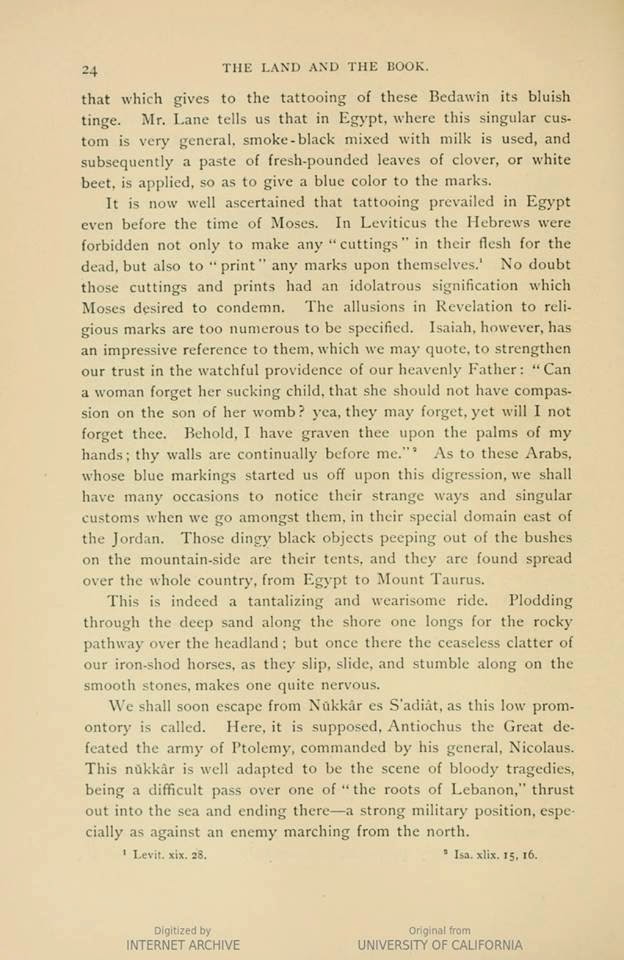
Eine merkwürdige Ziererei der Haut bei frauen und noch mehr bei Männern ist die bleibende Färbung und Zeichnung der Haut durch Tätowiren. Namentlich Pilger wollen ein solches unauslöschliches Andenken nach Hause bringen. Doch machen die Griechen eine Ausnahme, indem sie es, laut der Schrift, für Sünde halten. Die Pilgerzeichen trägt man gewöhnlich am Forderarme, manchmal wohl auch auf der Brust. In Jerusalem geben sich mit dem Tätowiren fünfzehn Männer, so Lateiner als Armenier, ab. Die Operazion heißt bei den Arabern Dak 1 (Berggren (1,329) schreibt Dass und Lane (1,´56) duck´ck.) und wurde zu meiner Zeit in einem Hause zwischen der neuen Taferne und dem großen armenischen Kloster verrichtet. Zum Tätowiren bedarf man eines Models, eines Farbstoffes und eines Stechinstrumentes. Der Model ist von Holz wie bei unsern Druckern, aber doppelt, d.h., zu Ersparung von Holz erscheinen auf beiden Seiten zwei verschiedene Model. Es gibt überhaupt eine kleine Auswahl von Bildern oder Zeichen, die man auf die Haut überträgt. Ein Bild z.B. stellte Johannes den Evangelisten mit Feder und Buch dar. Der Farbstoff, in einem bleirenen, kegelförmigen gefäße aufbewahrt, und etwas dicker, als Tinte, so wie von Farbe blau, besteht aus einer Mischung von Schießpulver, Indigo und Essig. Der Araber nennt das Gemische Che.ber oder heber (Tinte). Dieses Pigemnt wird auf den Model gestrichen, dieser auf die Haut gedruckt, und so erhält man den Abdruck. Nun streicht der Operator Farbe in die Nähe der zeichnung, ergreift mi der linken, Haut anspannend, den zu operirenden Theil, und mit der Rechten operirt er, in der er eine feine, lange, mit einer Art Handgriff versehene Doppelnadel hält, um diese, in die Farbe getupft, 1.. tief den gedruckten Linien nach einzustechen 2. (wenn ich mich recht erinnere, heißt dieses Stechen bei den Arabern Stobtim.) Solches geschieht mit vieler Gewandheit. Sehr selten fließt ein wenig Blut nach. Allerdings verursacht die Operation einige, doch keine bedeutende Schmerzen. Der Arm zeigte bei einem Manne eine Gänsehaut. Am meisten Schmerzen erregt es, wenn, nach Vollendung der Stiche, die Farbe kräftig eingerieben wird. Die Operazion nimmt für einen Arm allein einen halben Tag weg, und kostet dann 10 Piaster. ich sah einen Arm einen Tag nach dem Dak (Tätowiren); die Entzündung oder Reizung war höchst geringe, und ich hörte sonst nichts von nachteiligen Folgen."












Pretplati se na:
Postovi (Atom)